Thabit is a focused fasting tracker I designed, built, and launched to the App Store in a week. It now has 500+ users who found it organically during its first week live.
Go from a sketch in my notes to a real app in the App Store. One week. Solo.
Thabit is a fasting tracker for Ramadan. It helps Muslims log daily fasts, track missed or excused days, and manage make-up (Qada) fasts after the month ends. The core loop is small by design: open the app, tap a status, move on with your day.
Most Islamic apps try to do everything at once. Thabit is the opposite. It focuses on one workflow and treats that workflow with the seriousness it deserves.
I built the first version in the seven days leading up to Ramadan 2026 and shipped it to the App Store on day one of the month. By the end of week one, 500+ people had installed it organically through App Store search.
Before writing a single line of code, I talked to friends and family about how they actually tracked their fasts during past Ramadans. The answers were all over the place. Some used Notes. Some used paper. Most relied on memory and lost track by the second week.
Missed fasts were the biggest mess. No one had a system for tracking which days they owed back, let alone a plan to make them up after Ramadan ended.
I mapped the landscape across the top Islamic apps and common workarounds. The pattern was clear: every app was crowded with features, and none of them treated fasting as the primary workflow.
That gap was the whole opportunity. A narrow product, beautifully executed, with a clear reason to exist.
With a hard Ramadan deadline, there was no room for a pretty roadmap. I collapsed the work into four phases and moved through them in sequence, using each phase to make the next one cheaper.
The only metric that mattered was shipping a real app that real people could rely on from day one.
The fastest way to a real app is a short list you actually finish. I wrote the v1 spec as two columns: what we'd ship, and what we'd deliberately leave out. Both lists were equally important.
As a PM I've killed features. As a founder I had to kill features I personally wanted, with no one to blame but the deadline.
The goal of onboarding was to get someone from install to their first logged fast without a single dead-end screen. No email, no password, no "welcome" wall of text.
Each screen earns its place: set the intention, align the calendar, personalize, preview the progress loop, introduce recovery, make menstrual tracking opt-in, and offer Premium on the way out.
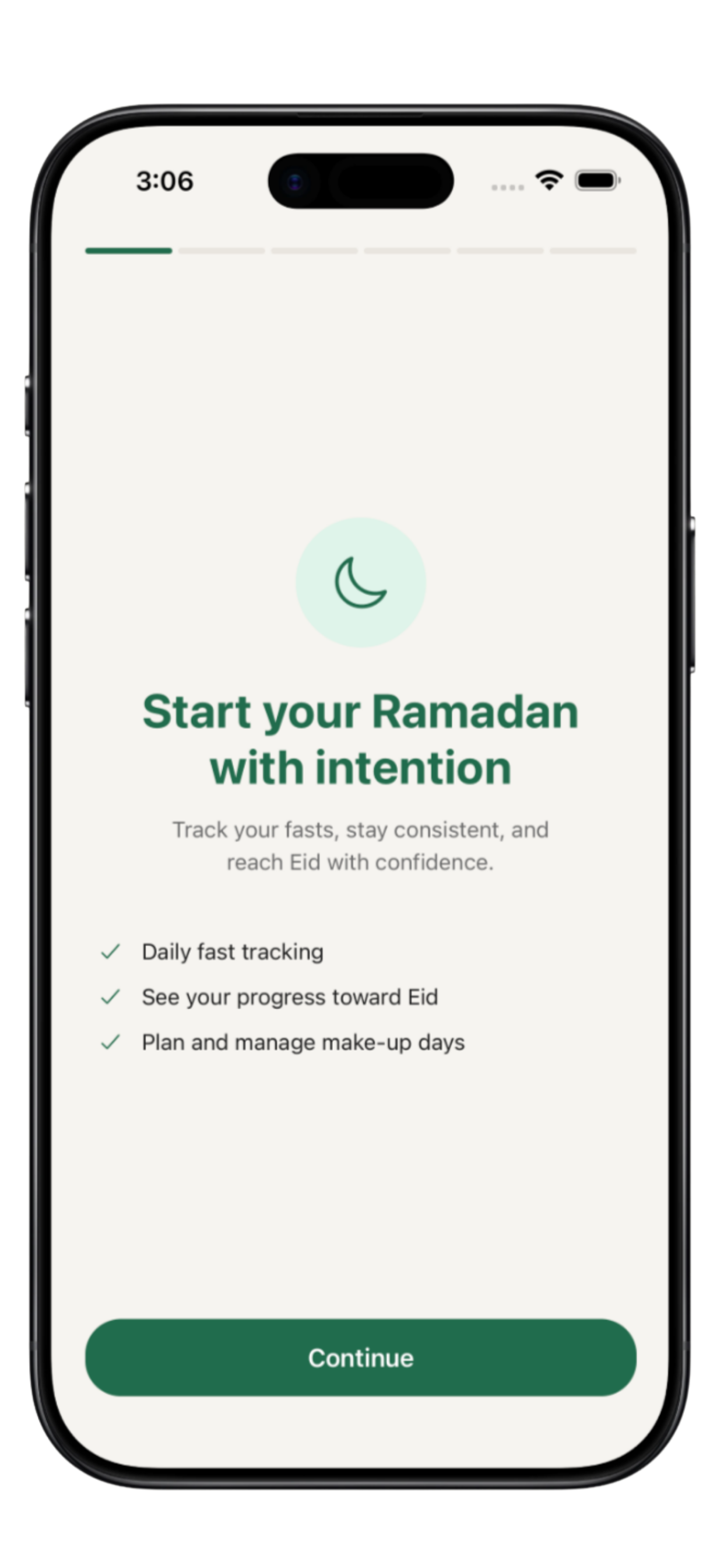
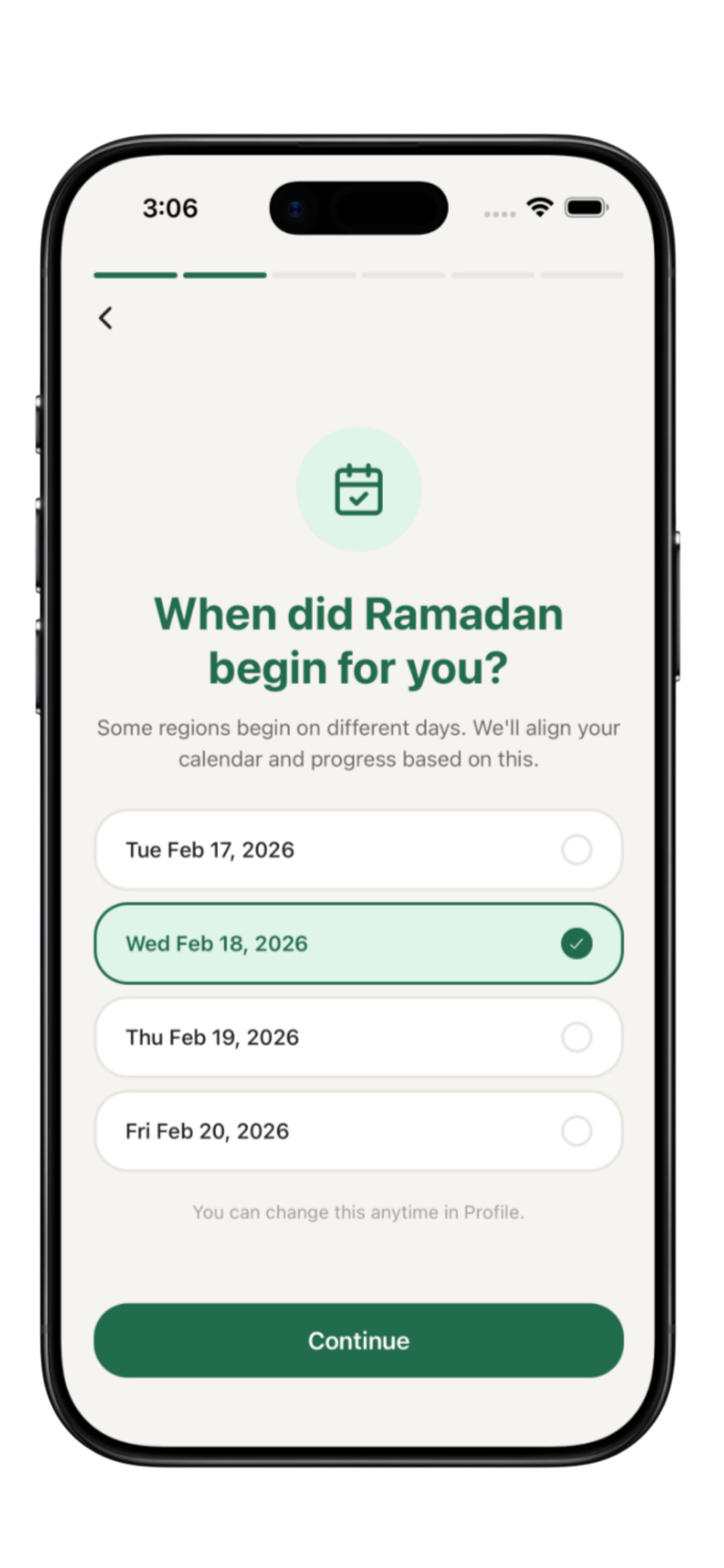
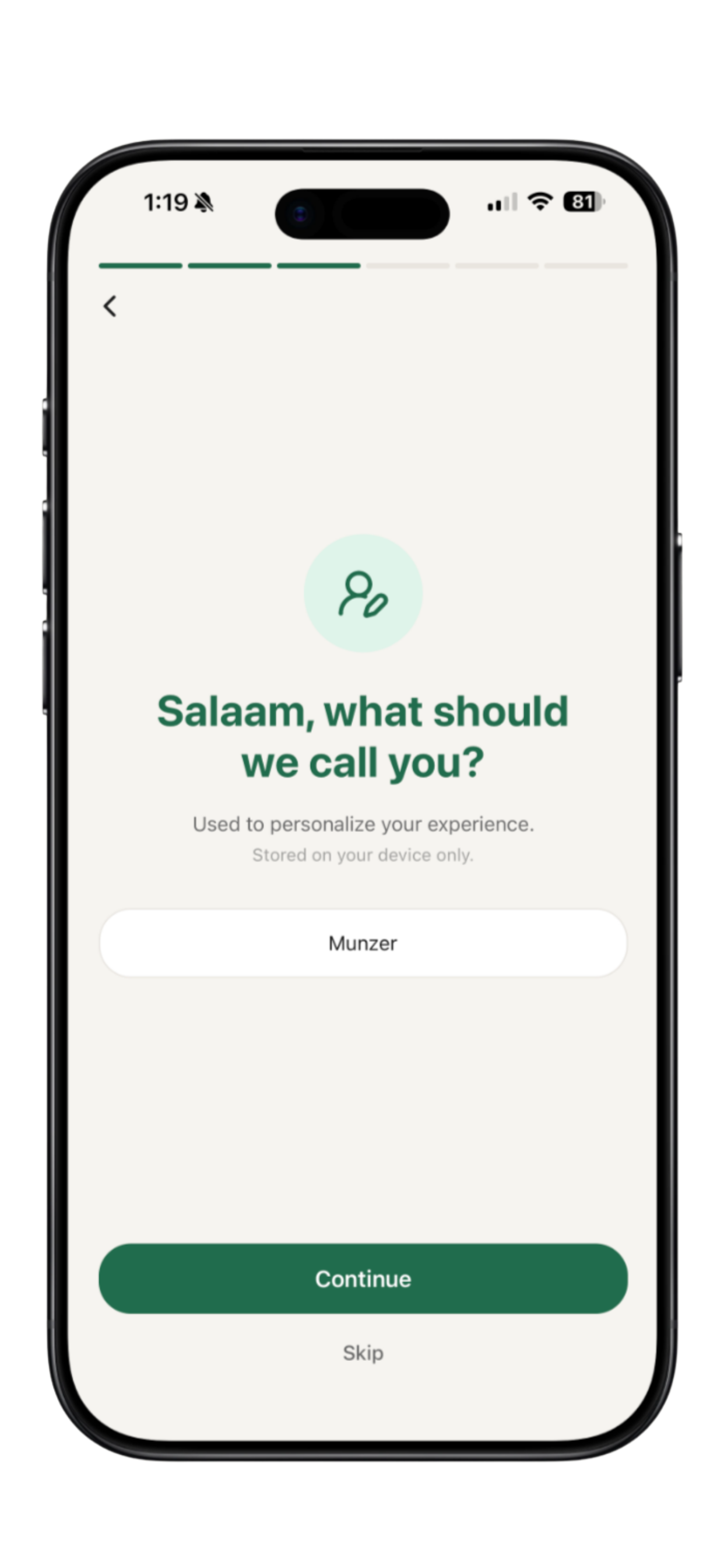
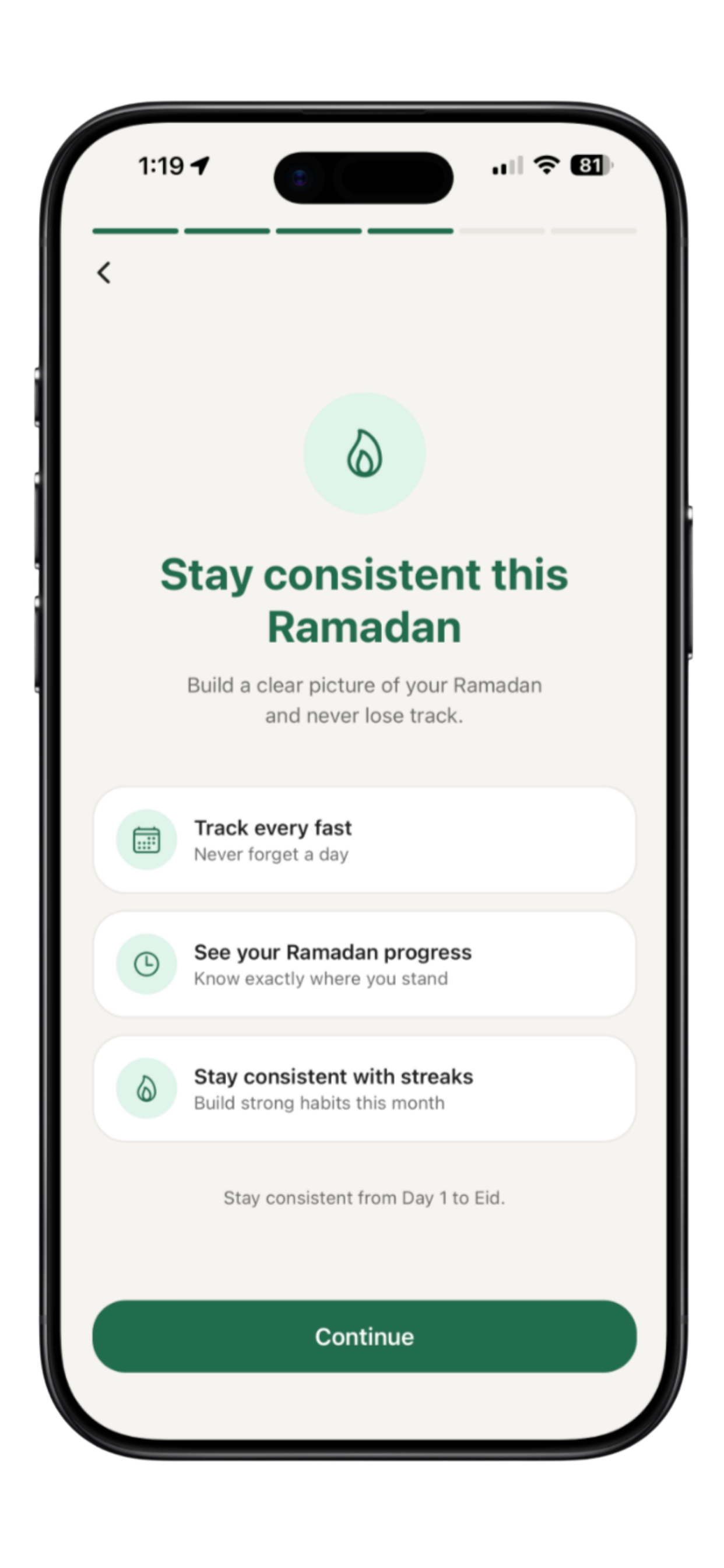
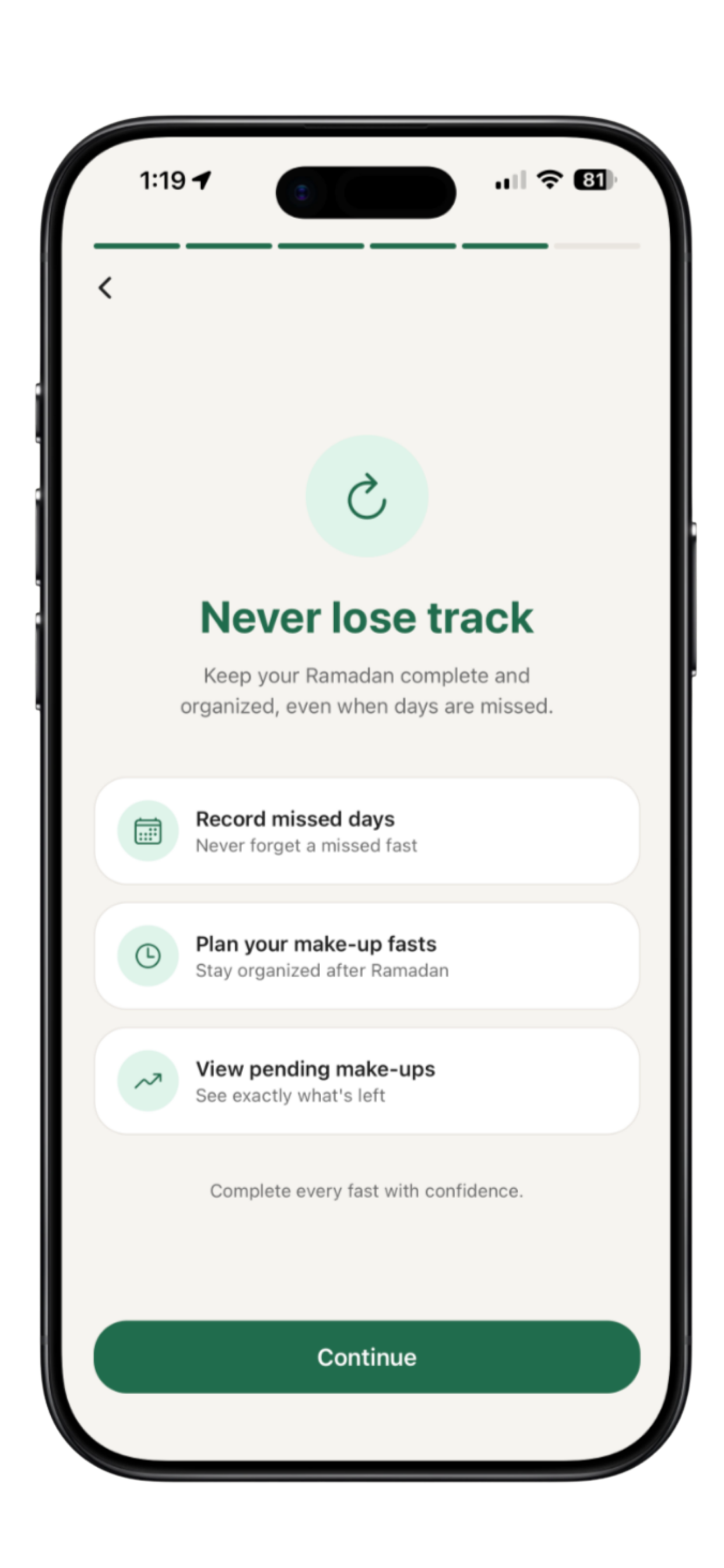
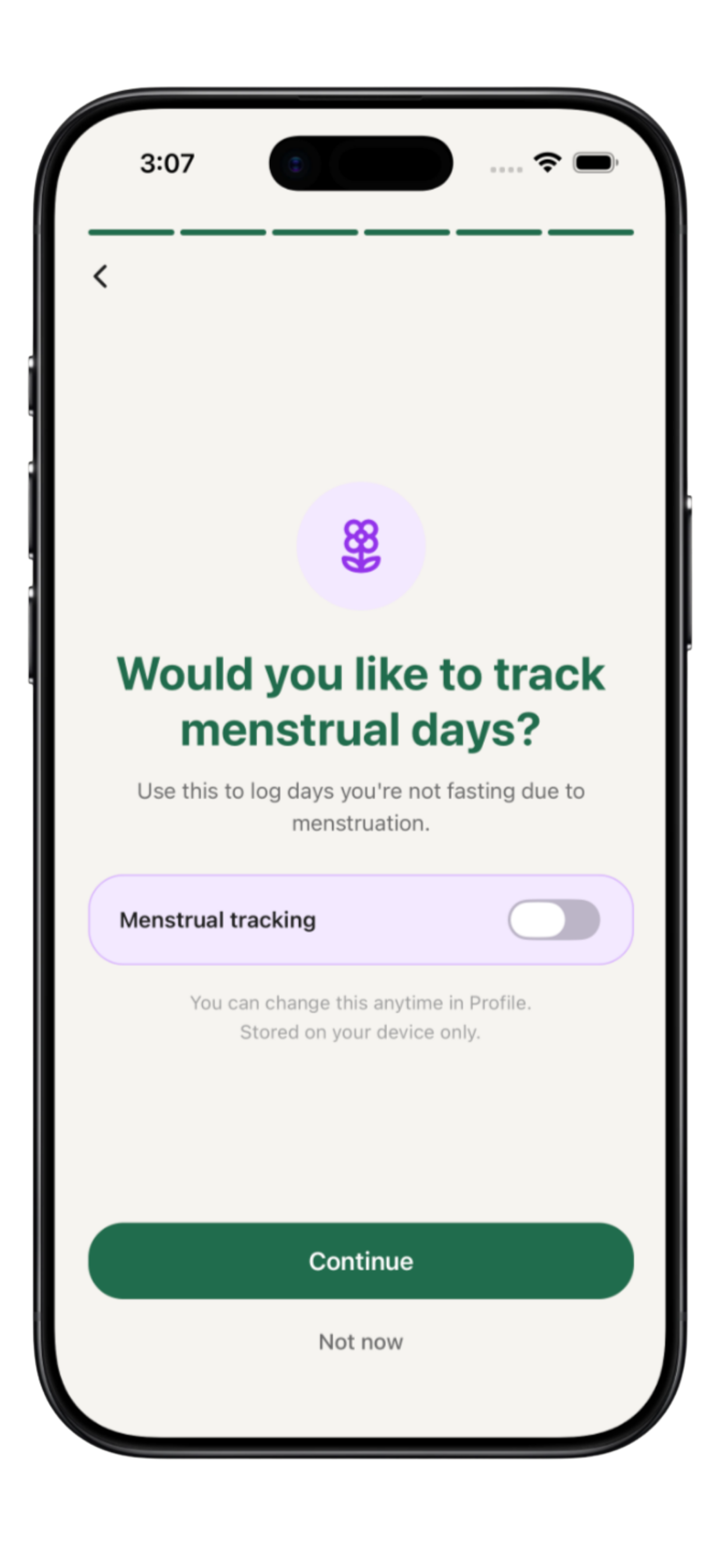
The goal was to log a fast in under two seconds. That shaped every screen. Home is the control surface. Calendar is the memory. Recovery is the plan. Everything else supports those three.
Tap any screen to enlarge.
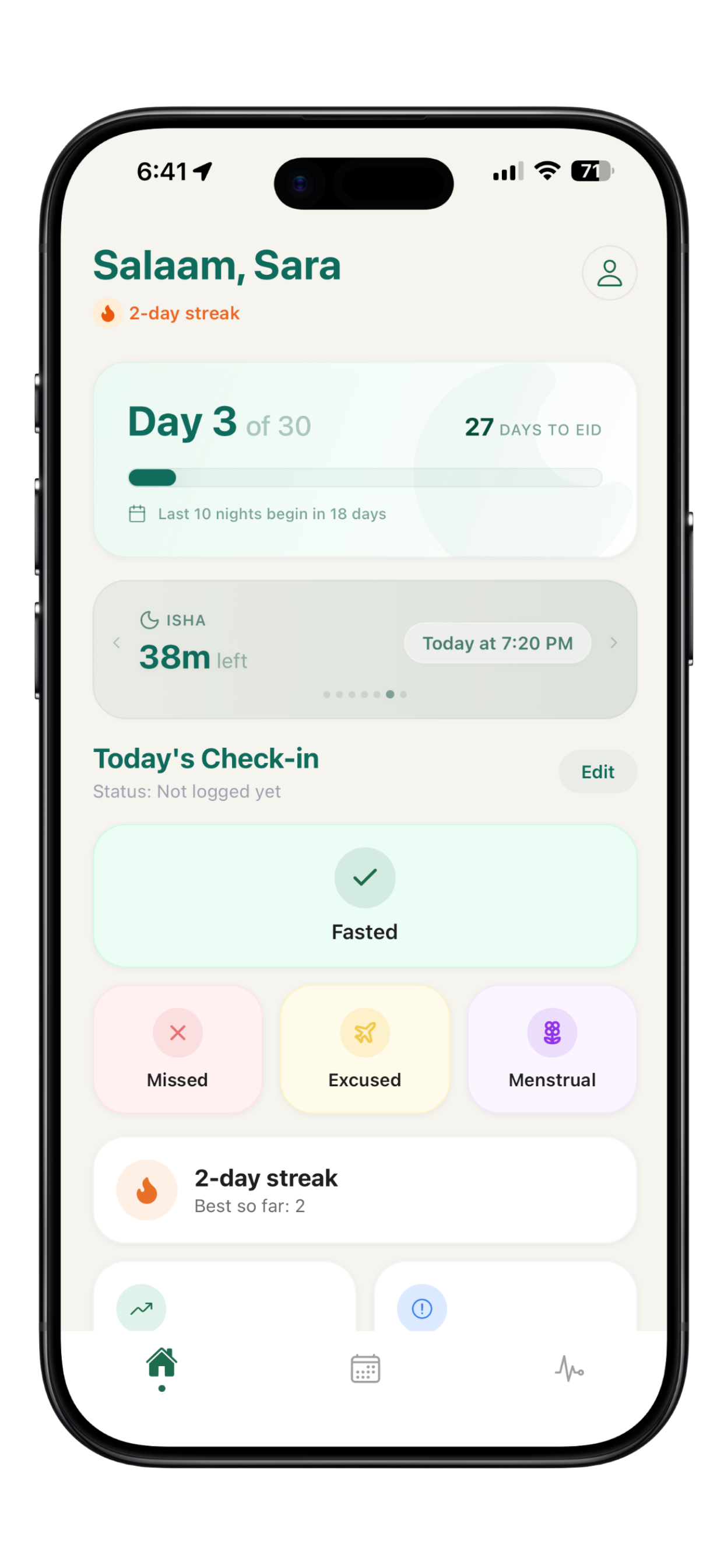
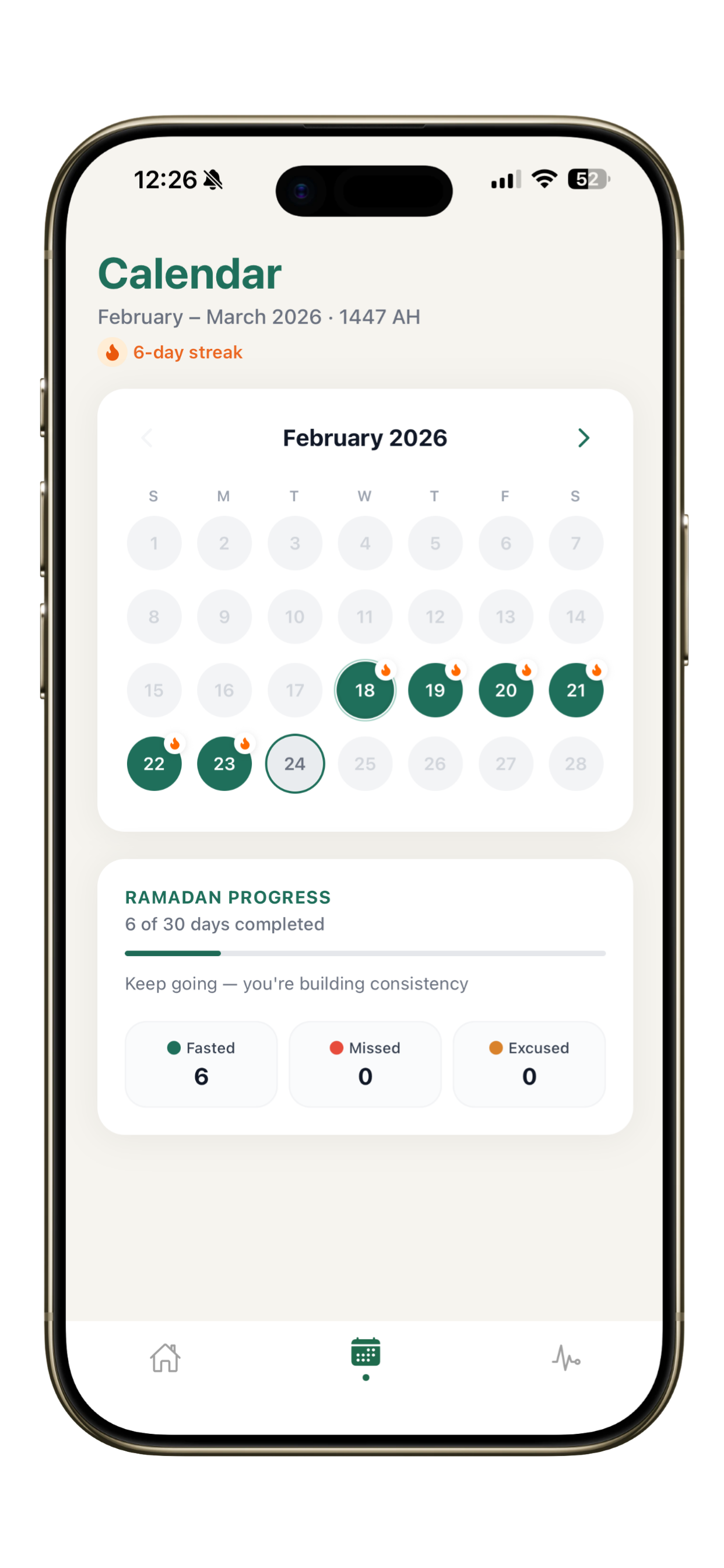
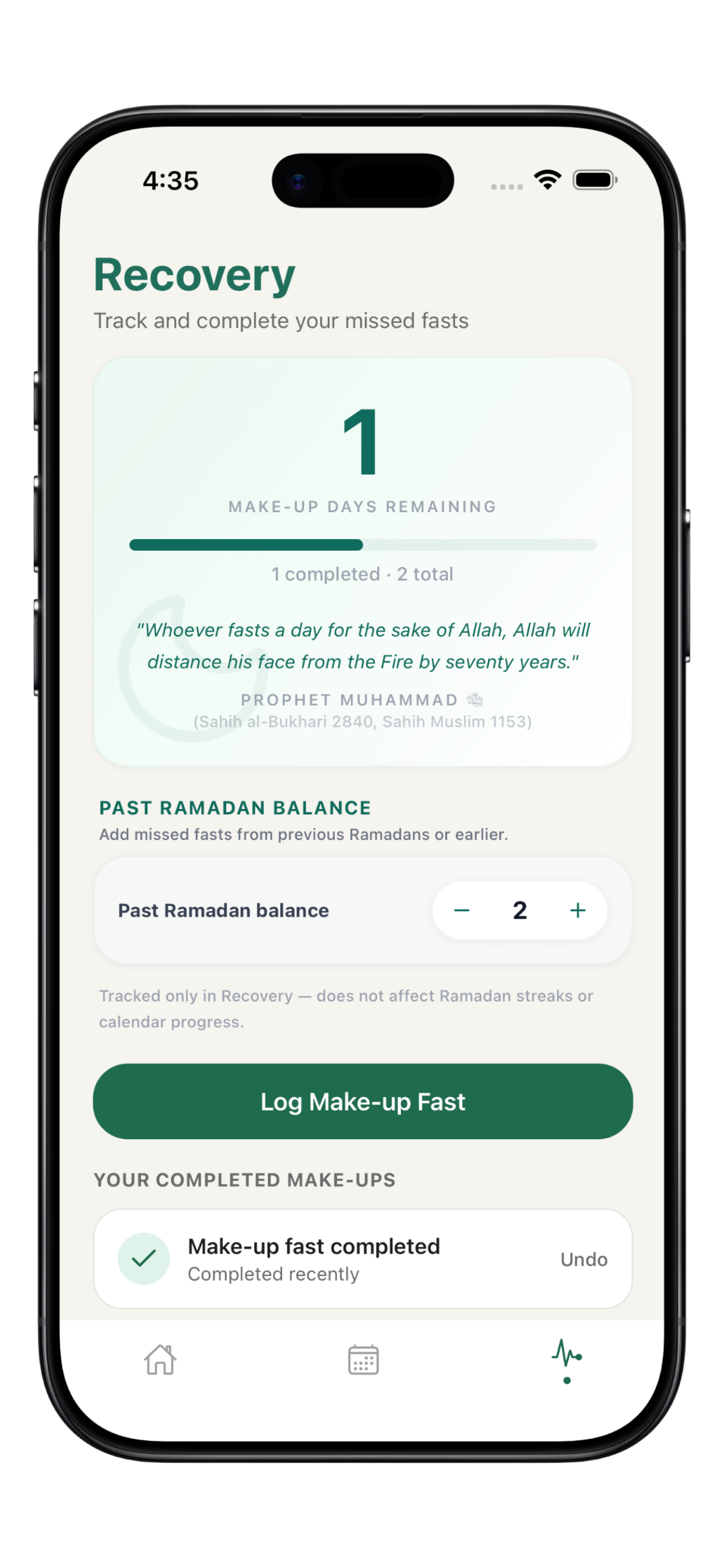
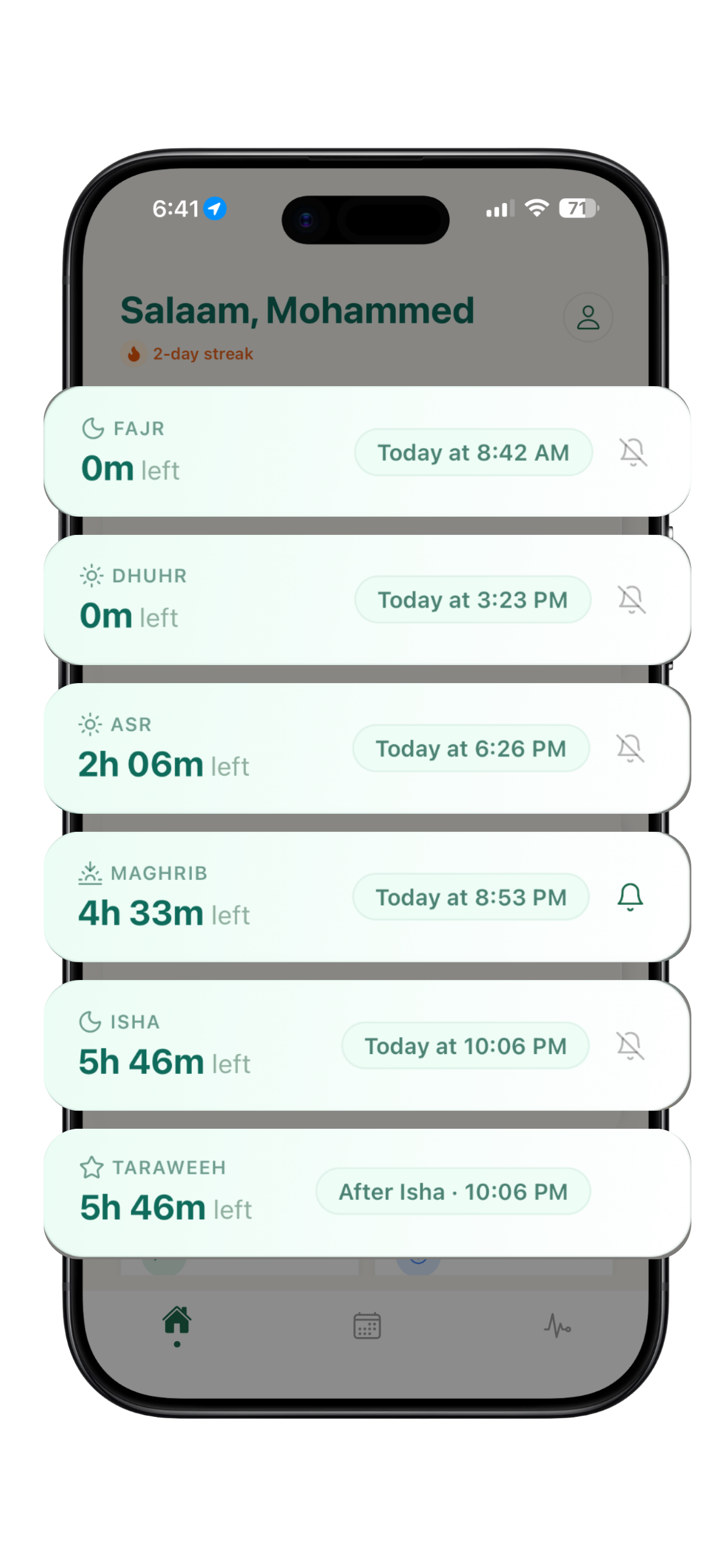
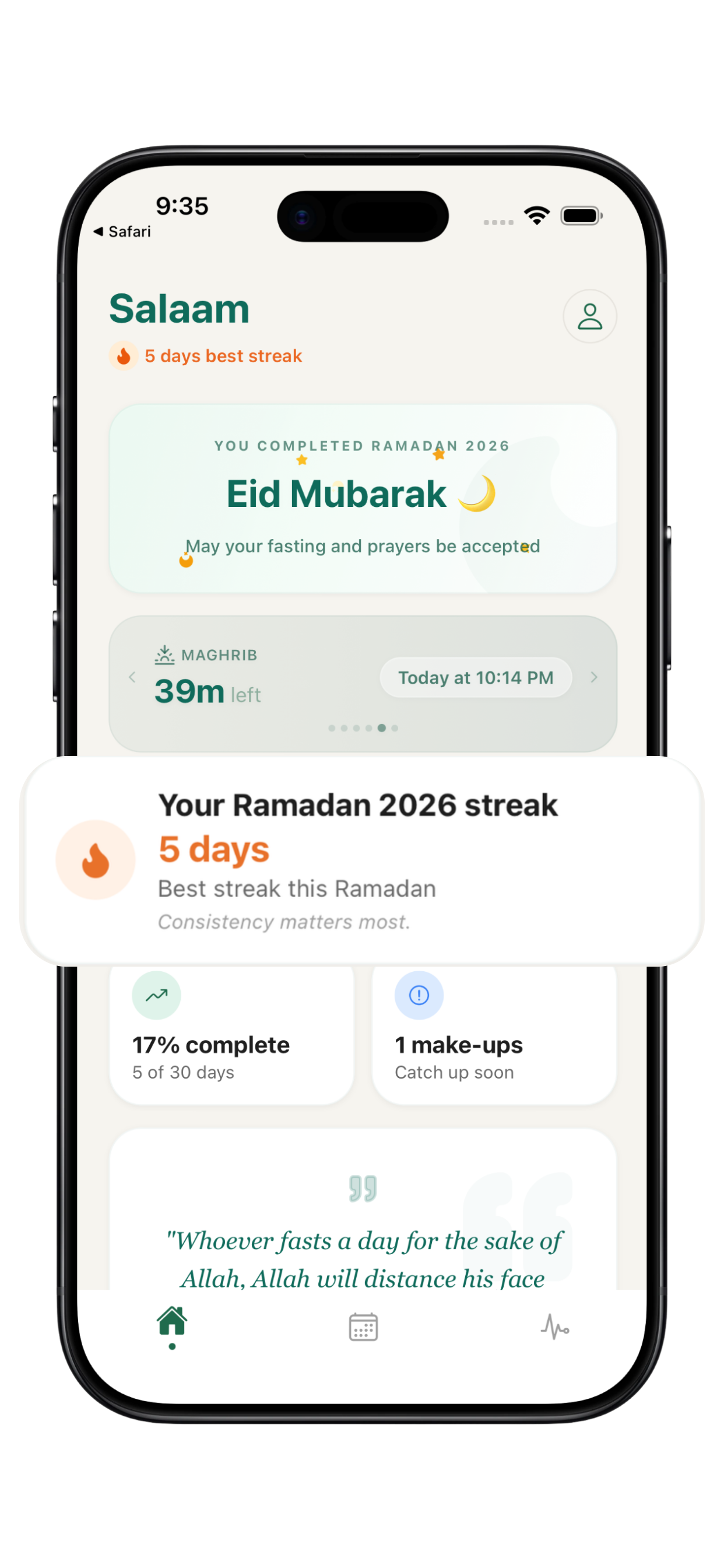
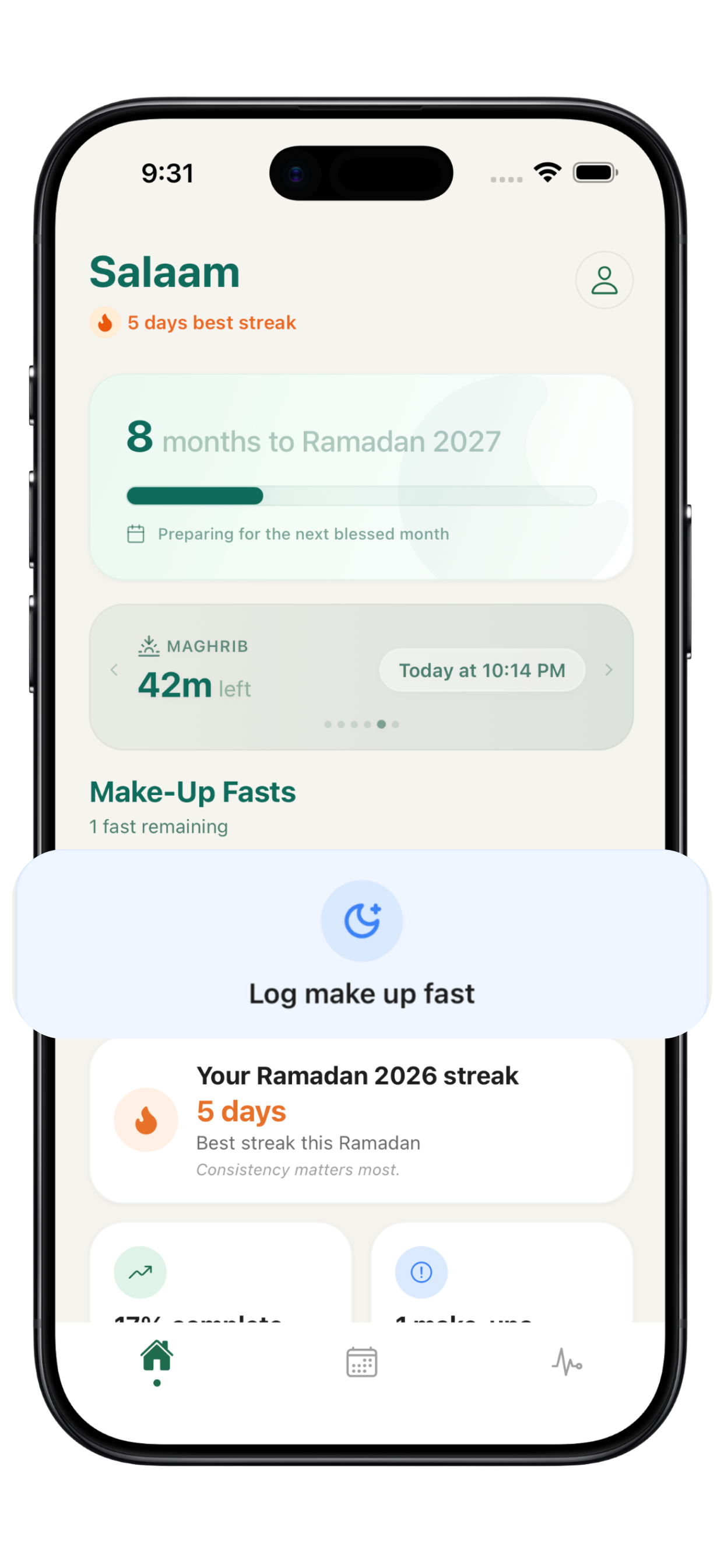
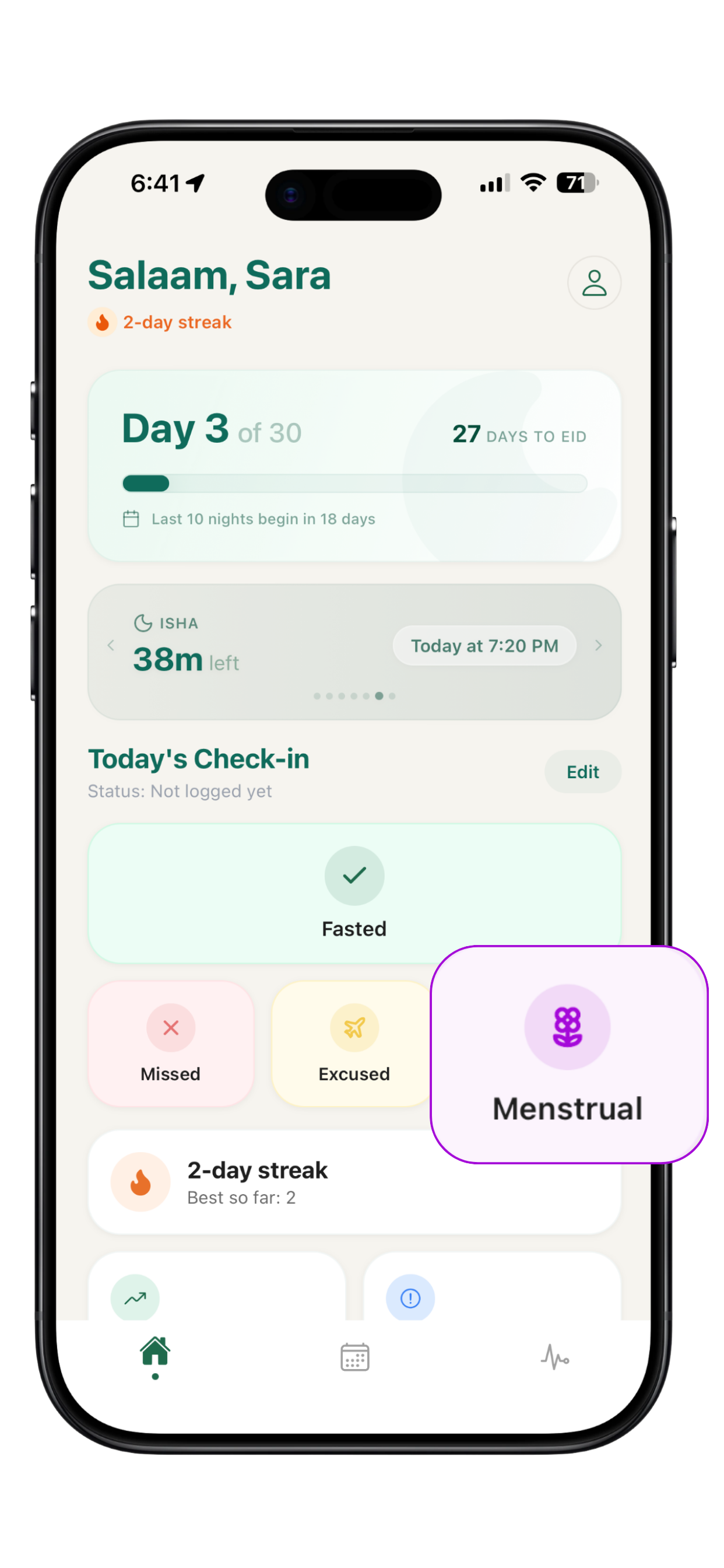
The original MVP had three statuses: Fasted, Missed, Excused. After talking with early users in my circle during week one, one theme kept coming back: tracking menstrual days honestly, without guilt, and without breaking a streak.
I shipped Menstrual as a fourth status a few days later. It's opt-in during onboarding, stored locally, reversible in Profile, and treated with the same calm tone as the rest of the app. No special UI, no shame, no stigma. Small change, real trust.
Every tool on this list was chosen for one reason: it let one person move at the speed of a small team. I leaned heavily on AI for pairing and wrote the spec, product copy, and store listing myself.
No backend to babysit. No accounts to manage. Nothing fragile in the critical path.
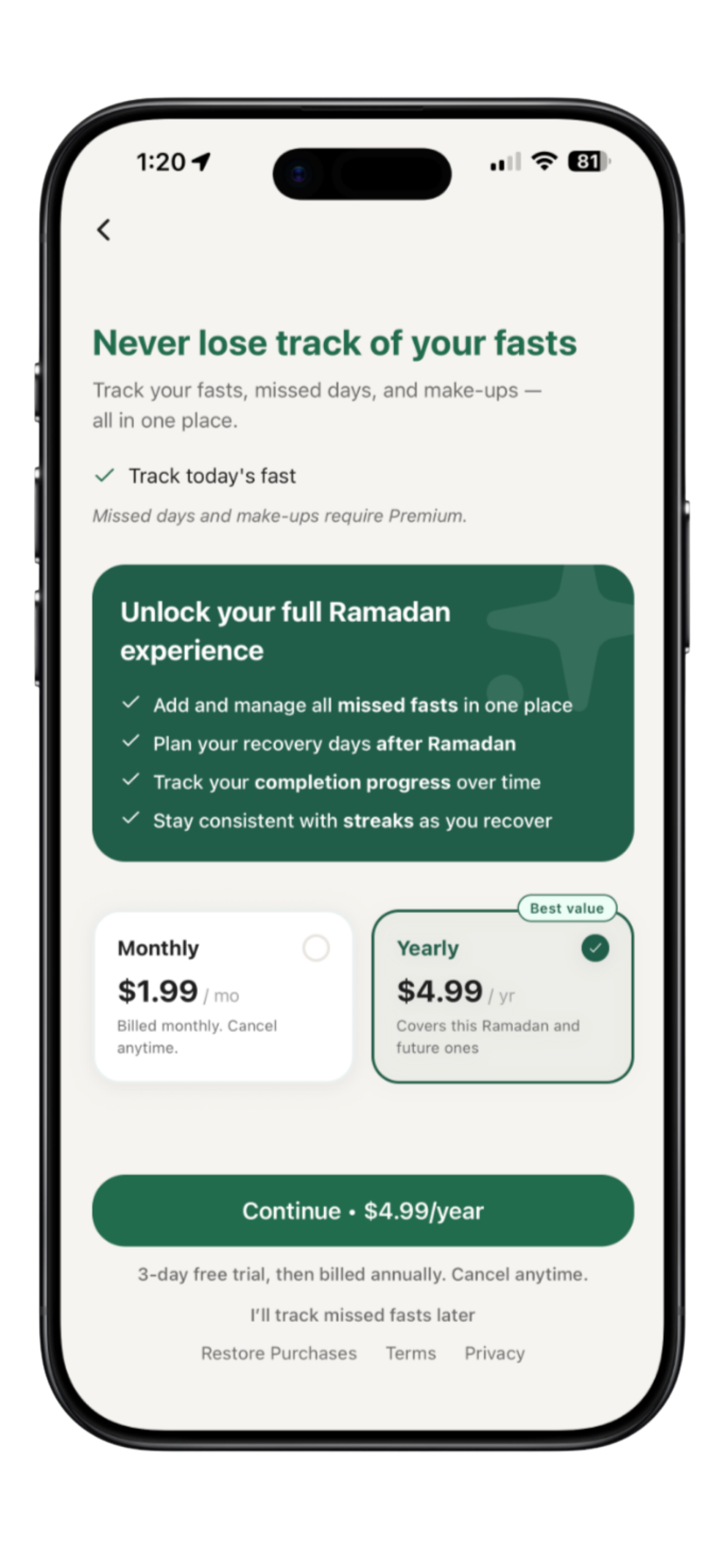
The pricing model had to respect the nature of the product. Fasting is a private, habitual act. Charging for the basic loop would have killed adoption. Charging for the long-tail accountability layer made sense.
The upgrade moment is diegetic: you miss a fast, you want to track it, you unlock recovery. It's not a wall, it's a door.
"As a PM, I'm used to influencing product decisions. Building solo meant owning them: every UX call, every tradeoff, every line of copy. No handoff. Just you and the gap between an idea and something people actually use."
A fasting app sounds simple until you try to ship one that people rely on every day. The hard parts were invisible: notifications that fire on time, cached prayer times that survive travel, and schedulers that don't stack duplicates.
Each of these was a sharp edge that would have broken trust the moment it slipped. Worth the time to get right.
The reviews I'm proudest of aren't the five-star ratings. They're the notes calling out UI, tone, and the way the app got out of the way during a month that asks a lot from people.
These reviews arrived in the first two weeks of launch, all from real users who found the app through App Store Search.
Thabit started as a question: what would this product look like if it was ruthlessly focused on one behavior? The answer turned out to be simpler, calmer, and more useful than any of the all-in-one alternatives I'd been using myself.
The PM-as-founder muscle I got to build here was the part I didn't expect. Writing the spec, running the scope, shipping the code, pricing the tiers, and reading the reviews. Every loop closed on me. That feedback loop is addictive, and I'd run it again.
If I extended it: lightweight optional cloud backup, a smarter post-Ramadan flow to retain users past Eid, and a real pricing experiment in v2. The product is small on purpose. It doesn't need to be everything.