Case Study 03 / Product Management · Lowe's · Internship

The future of value
at Lowe's.

A summer-long Digital Product Management project investigating how Lowe's customers perceive value, and what we could ship to make winning at every step of the journey feel obvious.

Product Management Strategy Customer Experience Analytics
Project North Star

Value encompasses a range of shopper perceptions. Our goal was to improve value perception across three focus areas.

From the deck · Internship deliverable
Role Digital Product
Management Intern
Team Loyalty, Engineering,
Analytics
Tools Adobe Analytics, Jira,
Fullstory, Medallia
Methodology Agile
Data-driven
Type Internship project
Summer 2024
Value isn't a price tag. It's a feeling the customer carries through the journey.

As part of my Digital Product Management internship at Lowe's, I led a project focused on enhancing the customer value journey through digital solutions. The brief was open-ended: figure out where customers were leaving value on the table, and propose what we should build next.

The work was grounded in analytics, competitor research, and cross-functional alignment with Loyalty and Engineering. The deliverable was a recommendation set, prioritized using a RICE-style scoring model, that could feed directly into the team's roadmap.

What you'll see below are selected slides from the internship deck, restructured into a PM-flavored case study. Specific metrics and internal flows have been generalized for portfolio use.

The Challenge
Customers were winning on price but didn't always feel it. The savings were there; the storytelling around them wasn't.
A four-phase loop: discover, analyze, prioritize, present.

Rather than start with a feature backlog, I started with a question: where, in the customer journey, does value perception break down? That question shaped the whole process.

The team operated on an Agile cadence, but the analysis itself was data-led: every recommendation needed to point to a metric, a pattern, or a competitor benchmark before it earned a slot on the deck.
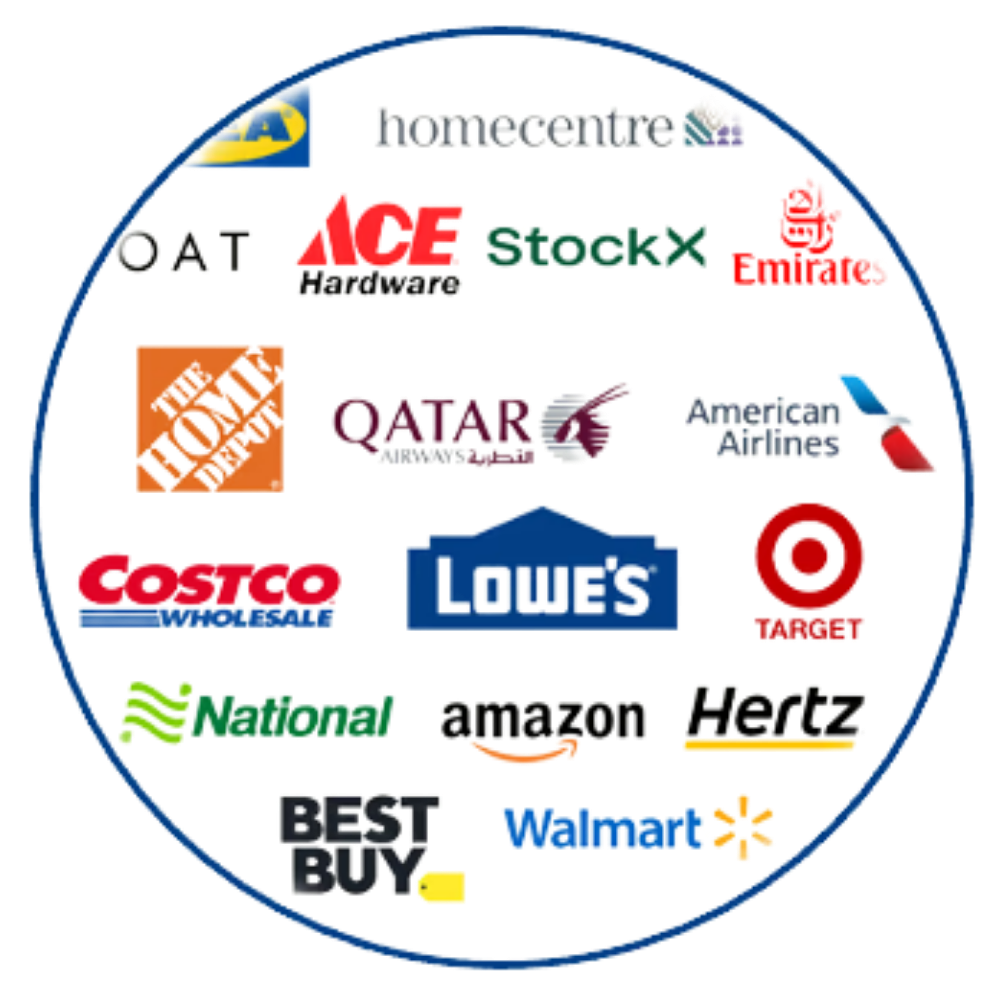
Competitive brand audit, 14 retailers and loyalty leaders
01
Complete Discovery
A 14-brand competitive scan across home improvement, marketplaces, and adjacent loyalty leaders (Costco, Best Buy, Hertz, National, Amazon, Target, Walmart). Goal: find value cues we weren't using.
Competitive scan
Analytics stack, Jira and Adobe Analytics and Fullstory and Medallia
02
Review Analytics
Adobe Analytics for funnel behavior, Fullstory for session-level friction, Medallia for VoC, and Jira for what was already in flight. Triangulating the same problem across four lenses.
Quant + qual
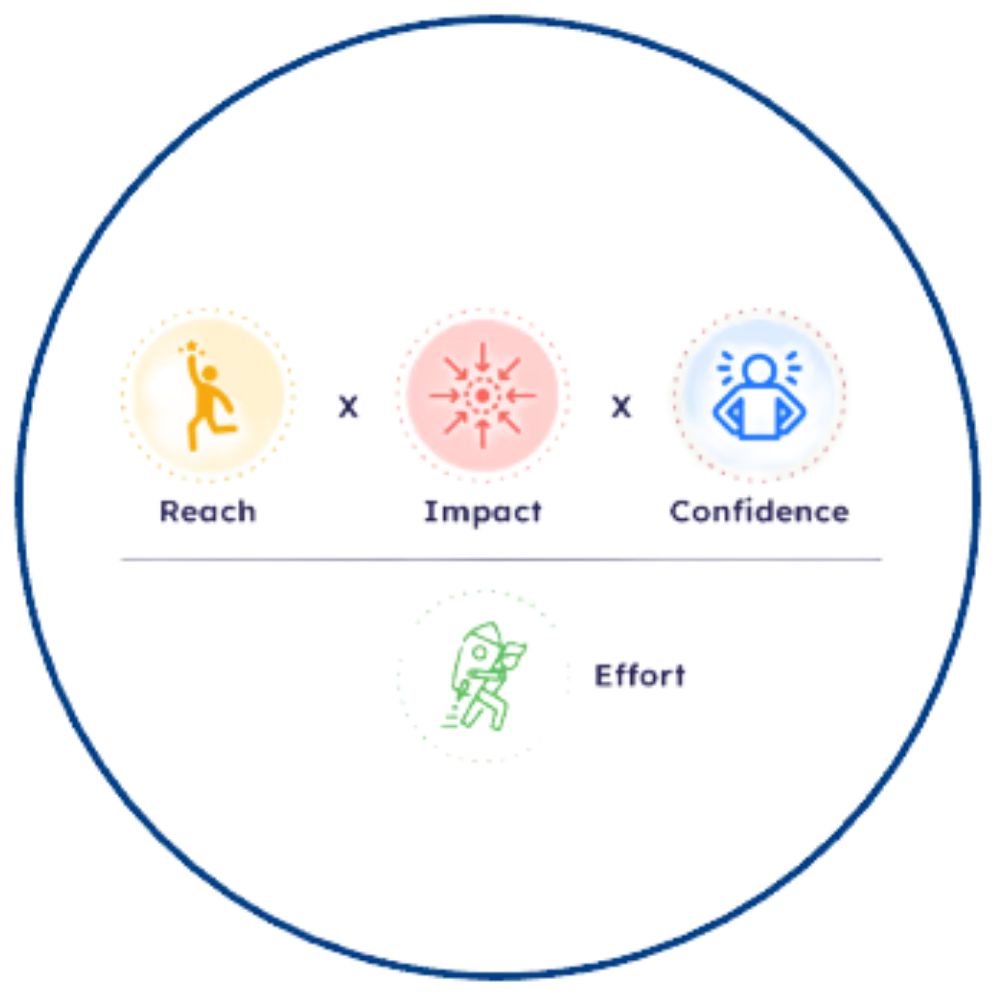
RICE scoring model: Reach times Impact times Confidence divided by Effort
03
Prioritize Opportunities
A RICE-style scoring model (Reach × Impact × Confidence ÷ Effort) to keep recommendations defensible to engineering and leadership alike. Feelings out, framework in.
RICE scoring
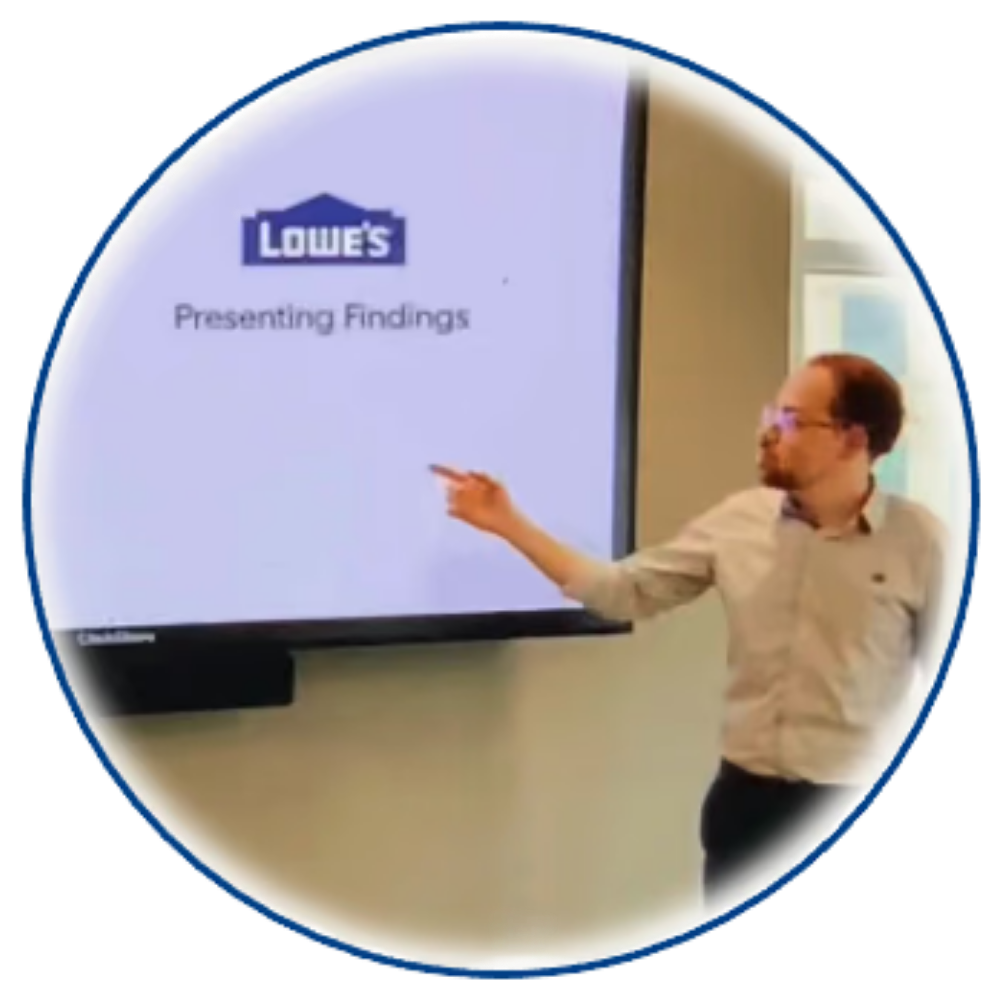
Presenting findings to the Loyalty product organization
04
Present Findings
A final deck delivered to the Loyalty product org with three pillar recommendations, KPIs to measure each, and a phased path from research to A/B test to ship.
Deliverable
Three pillars,
arranged from concrete
to abstract.

Customer interviews and VoC data converged on the same insight: value isn't one thing. It's a stack. At the bottom, price clarity (literal dollars saved). In the middle, purchase confidence (am I making the right call?). At the top, "why Lowe's" (loyalty, identity, repeat behavior).

Each pillar maps to a different customer voice, a different pain point, and a different KPI. Putting them on a single spectrum let us decide which to invest in first based on Reach × Impact, not gut feel.

Recommendations scored with RICE · Reach × Impact × Confidence ÷ Effort
01

Price Clarity

I'm saving $x on this item.
Results · Findings Primary KPI CVR
  1. Articulate savings throughout the journey.
    Customers were saving real money but only seeing it confirmed at checkout. The win was happening; the storytelling wasn't.
  2. Clarify the final price earlier in the funnel.
    Surface services, loyalty offers, and shipping costs before checkout, while preserving MAPP compliance.
  3. Test $ vs % vs both in promotions.
    Different shoppers respond to different framings. The deck recommended an A/B test to codify a system-wide rule.
Competitive scan

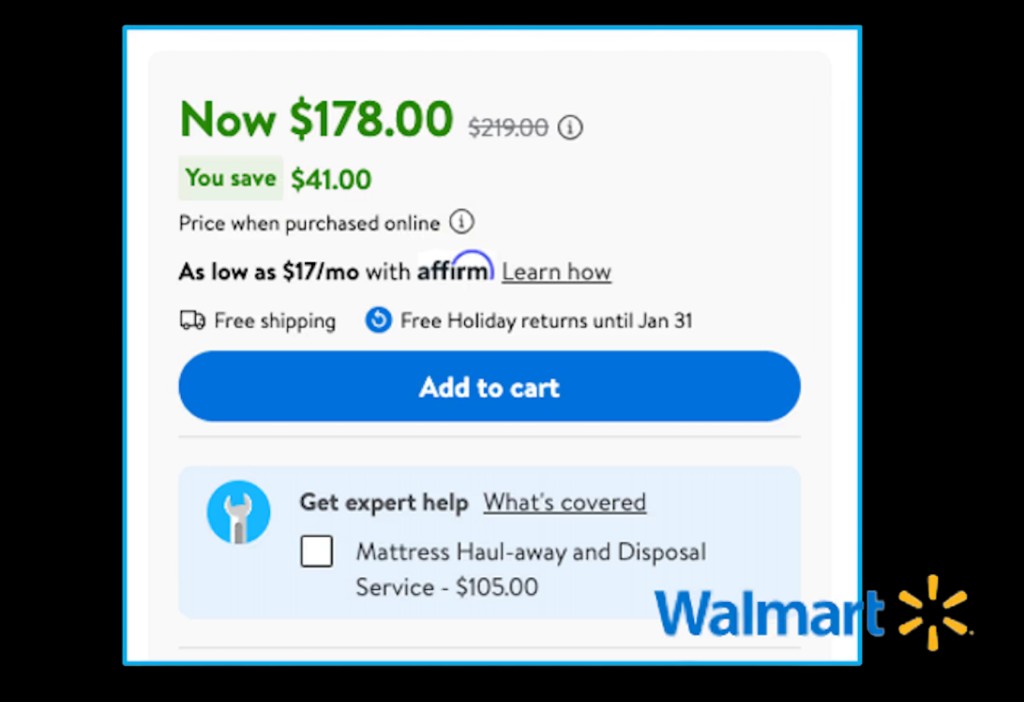
How peer retailers visually communicate price and savings on their PDPs — the patterns I benchmarked Lowe’s against when shaping the Price Clarity recommendations.
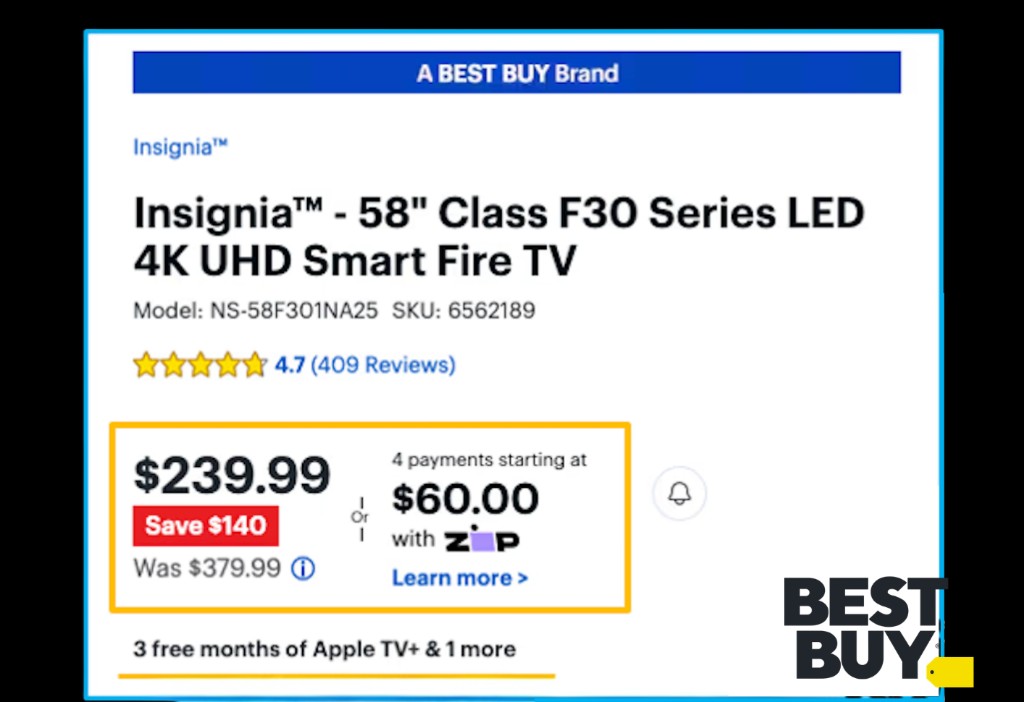
Best Buy PDP price area: $239.99 with red ‘Save $140’ badge, ‘Was $379.99’, and 4-payment financing with Zip.
Best Buy Bold price, red “Save $140” badge, and a co-branded perk (3 free months of Apple TV+) all stack inside one outlined block. The hierarchy reads at a glance.
Walmart PDP price area: green ‘Now $178.00’ with strikethrough $219.00 and a green ‘You save $41.00’ pill.
Walmart Green is doing all the work — “Now”, the new price, and the “You save” pill all share one color, so the savings story is impossible to miss.
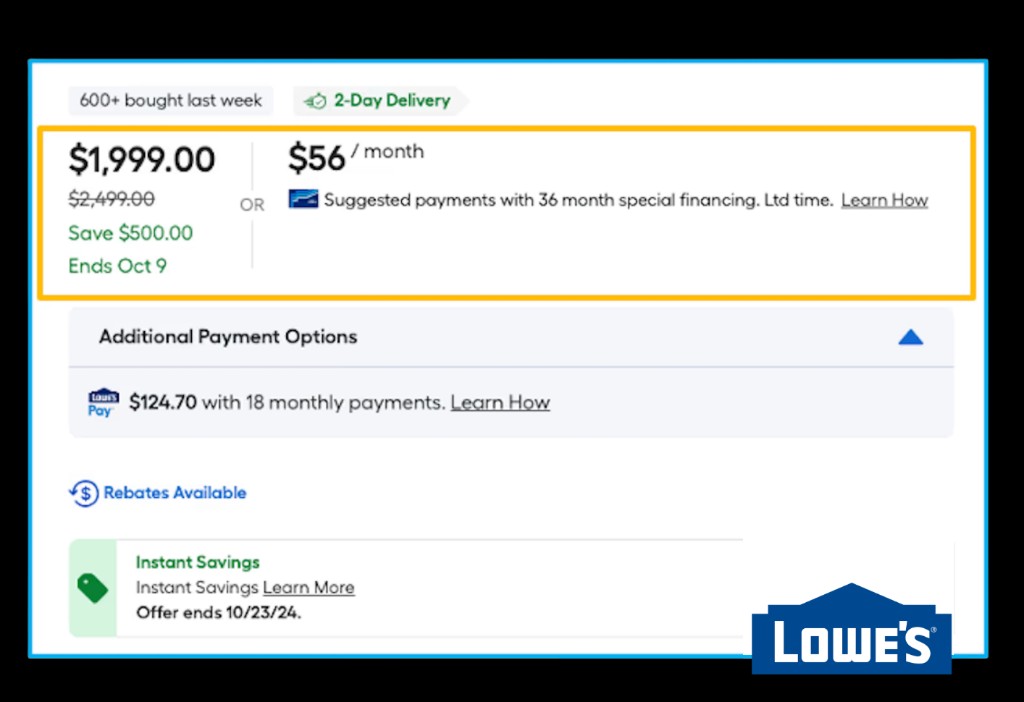
Lowe’s PDP price area: $1,999.00 with strikethrough $2,499.00, ‘Save $500.00’, monthly financing, additional payment options, rebates, and instant savings.
Lowe’s — baseline Was vs. now, dollar savings, and instant savings + rebates are all surfaced — but they live in five separate visual containers, which dilutes the “you saved $500” moment.
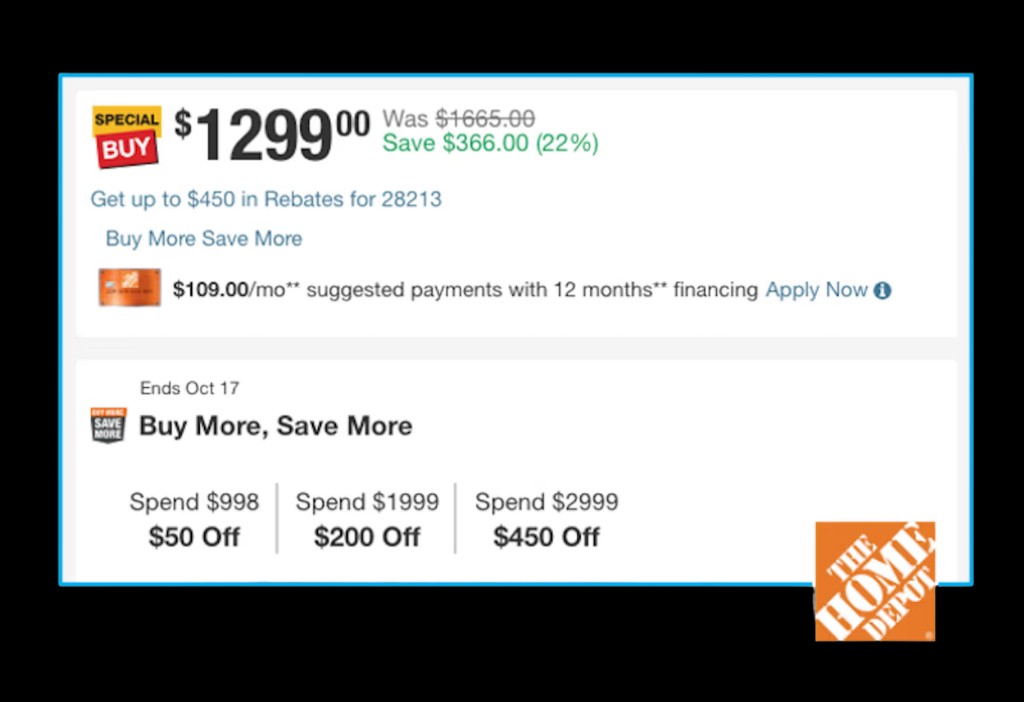
Home Depot PDP price area: red ‘Special Buy’ badge, $1,299.00, was $1,665.00, ‘Save $366.00 (22%)’, and a Buy More Save More tier table.
Home Depot Strikethrough was-price plus a “Special Buy” flag, anchored by a Buy-More-Save-More ladder that turns the discount into an action: spend more, save more.
02

Purchase Confidence

This purchase meets my needs.
Results · Findings Primary KPI V-LTR
  1. Improve assurance at the moment of decision.
    Timing, price, returns, and protection signals were scattered across the page. Customers had to assemble confidence themselves.
  2. Demonstrate savings more clearly in cart.
    Shoppers wanted a "you saved $X" recap at checkout, not just a strikethrough next to the line item.
  3. Surface social proof and trust badges on PDPs.
    Especially for high-consideration categories like appliances and tools, where the wrong choice is expensive to undo.
Competitive scan

How peer retailers build confidence at the moment of decision — through trust badges, savings recaps, exclusivity, and reassurance moments in the cart.
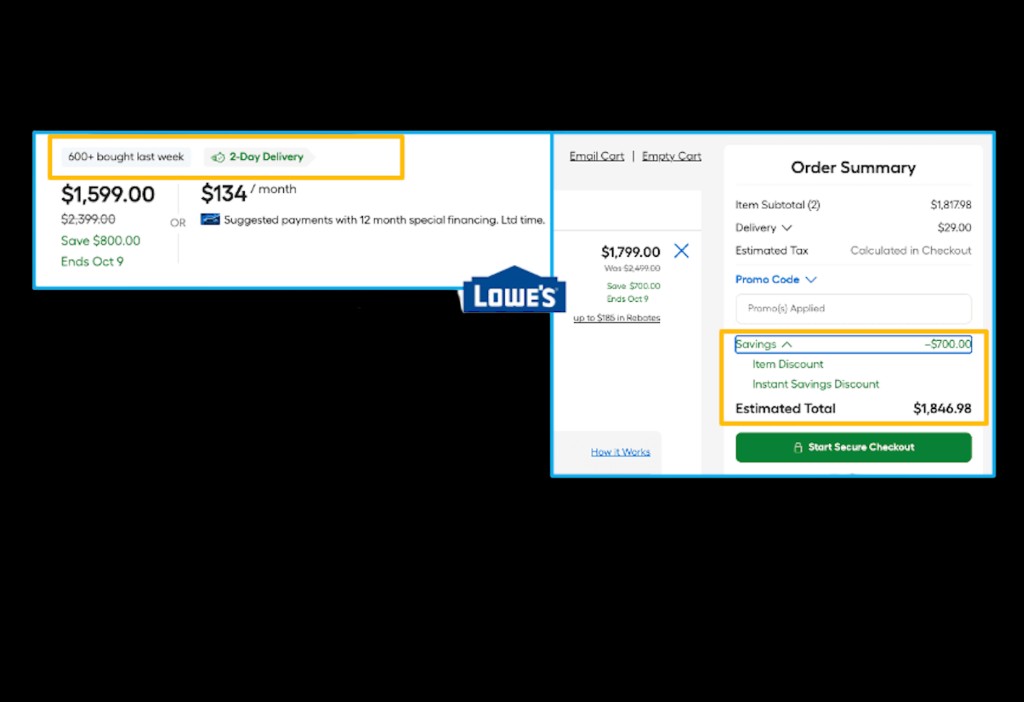
Lowe’s PDP and Order Summary: ‘600+ bought last week’, 2-day delivery badge, $1,599 with $800 savings, and an Order Summary breaking out item discount and instant savings.
Lowe’s — baseline Social-proof badges (“600+ bought last week”) and 2-day delivery push the customer toward checkout. Cart breaks out item discount + instant savings — the right ingredients, but the savings story could be louder.
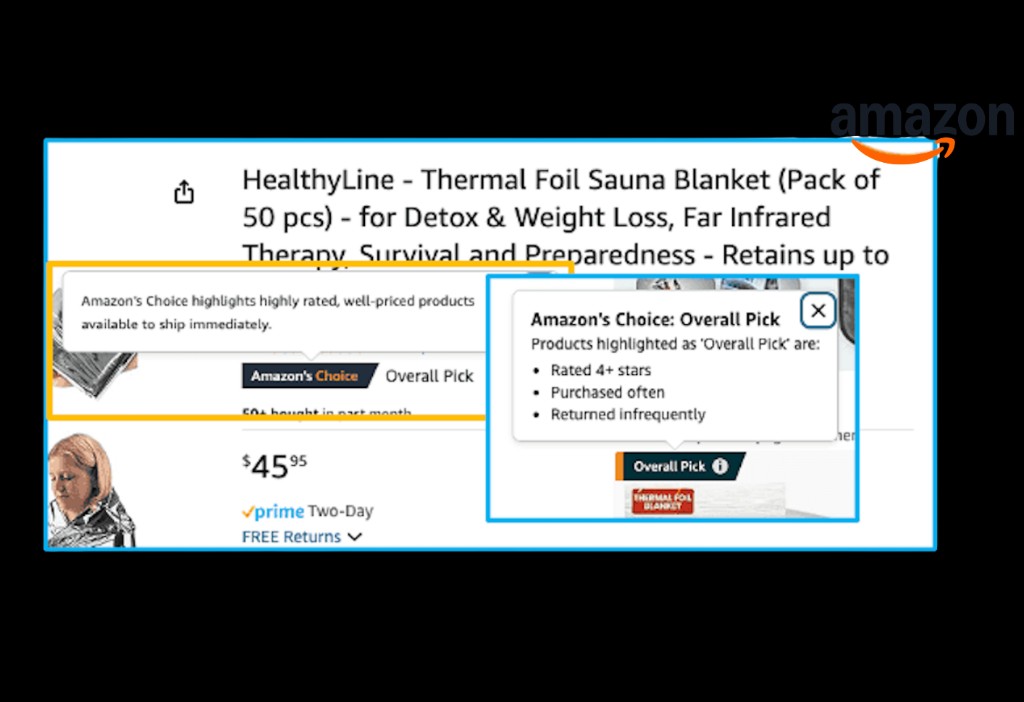
Amazon PDP showing ‘Amazon’s Choice’ and ‘Overall Pick’ trust labels with an explainer tooltip listing rated 4+ stars, purchased often, returned infrequently.
Amazon “Amazon’s Choice” and “Overall Pick” do confidence in two words. The hover explainer (“rated 4+ stars, purchased often, returned infrequently”) makes the badge feel earned, not branded.
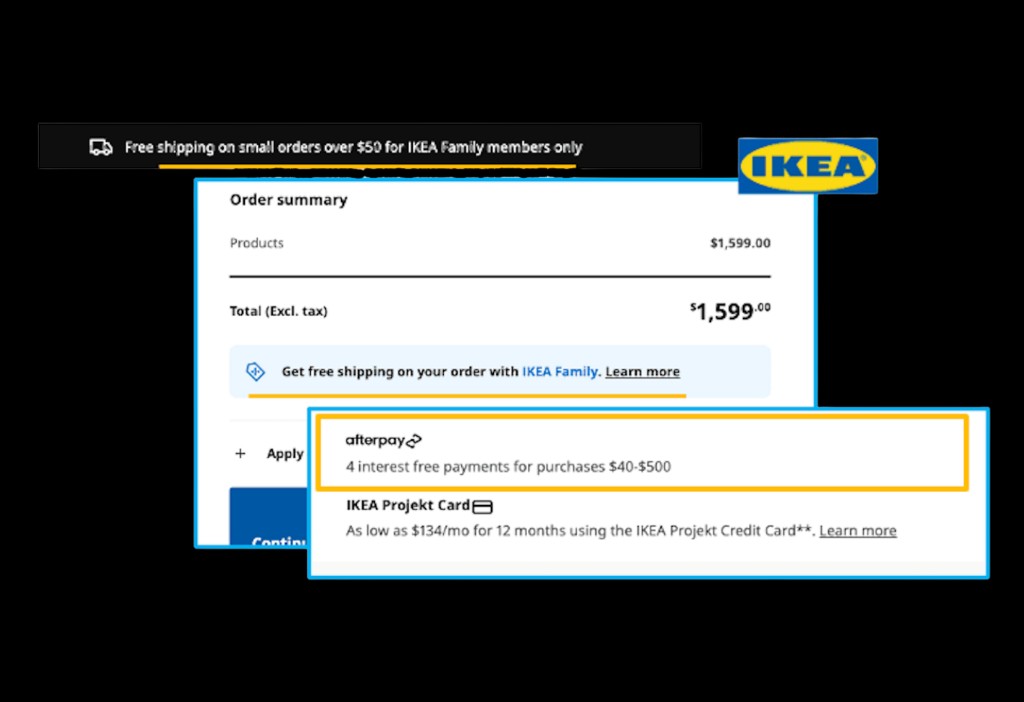
IKEA cart: ‘Free shipping on small orders over $50 for IKEA Family members only’, $1,599 total, with Afterpay 4 interest-free payments and IKEA Projekt Card financing options.
IKEA Members-only free shipping converts the perk into a sign-up moment. Afterpay + IKEA Projekt Card give the customer multiple ways to say yes — payment optionality is its own form of assurance.
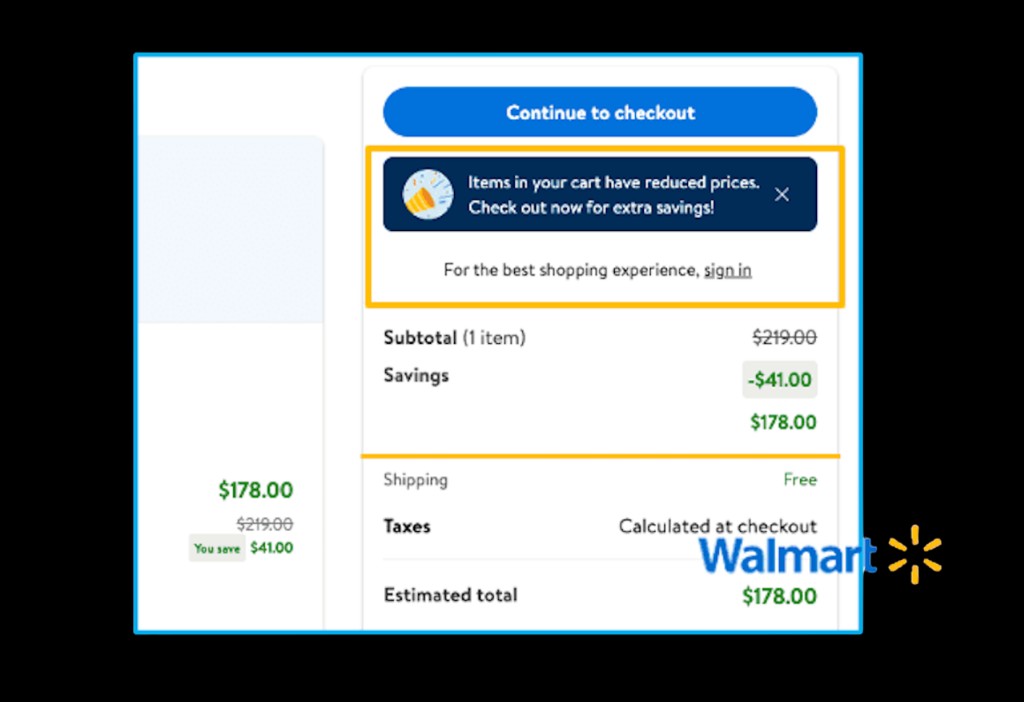
Walmart cart: dark callout ‘Items in your cart have reduced prices. Check out now for extra savings!’ above an order summary showing strikethrough $219, −$41 savings pill, and $178 estimated total.
Walmart A celebratory cart-level nudge (“Items in your cart have reduced prices”) congratulates the customer on saving. That little dopamine hit lifts confidence right before checkout.
03

Why Lowe's

I'm a Lowe's shopper.
Results · Findings Primary KPI CLTV
  1. Articulate "why Lowe's" instead of any other retailer.
    Customers couldn't always name what made Lowe's different at a glance. The brand promise needed to live on the page, not in a brochure.
  2. Reinforce the brand promises we already deliver on.
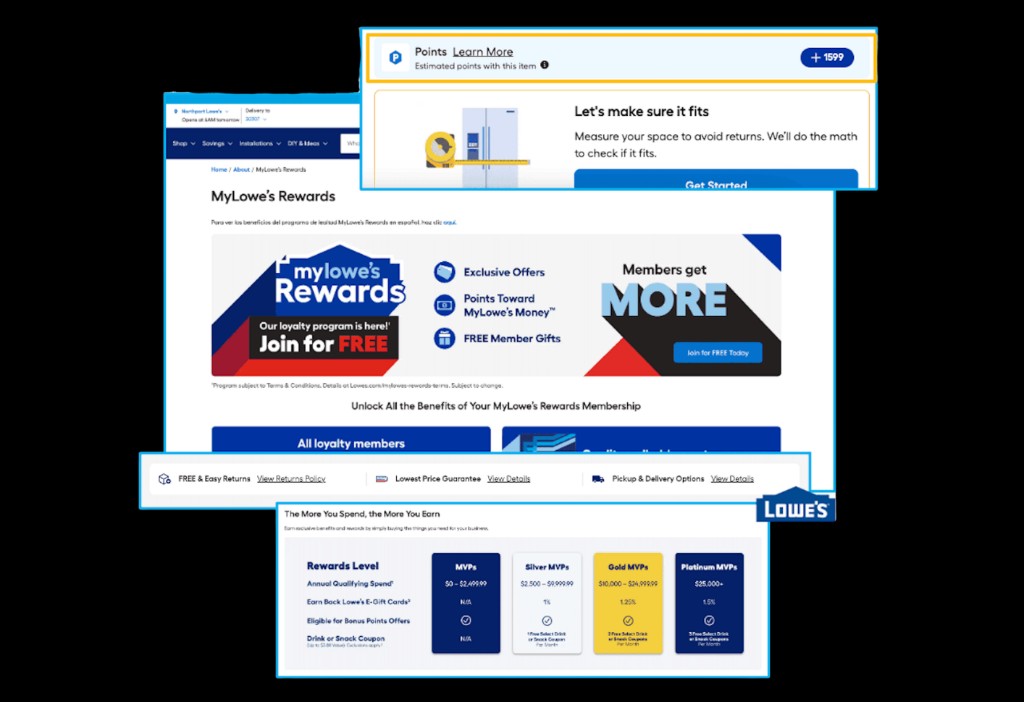
    Loyalty, Free Shipping, Ease of Returns, and Price Match are all real, but they were quietly bottom-of-page footnotes.
  3. Take cues from tier-driven loyalty programs.
    Hertz Gold and National Emerald show how status itself becomes a reason to come back. There's a moat in the membership card.
Competitive scan

How retailers (and a best-in-class loyalty analog) build a clear “come back to us” story — through tiered programs, value-add services, and earned authority signals.
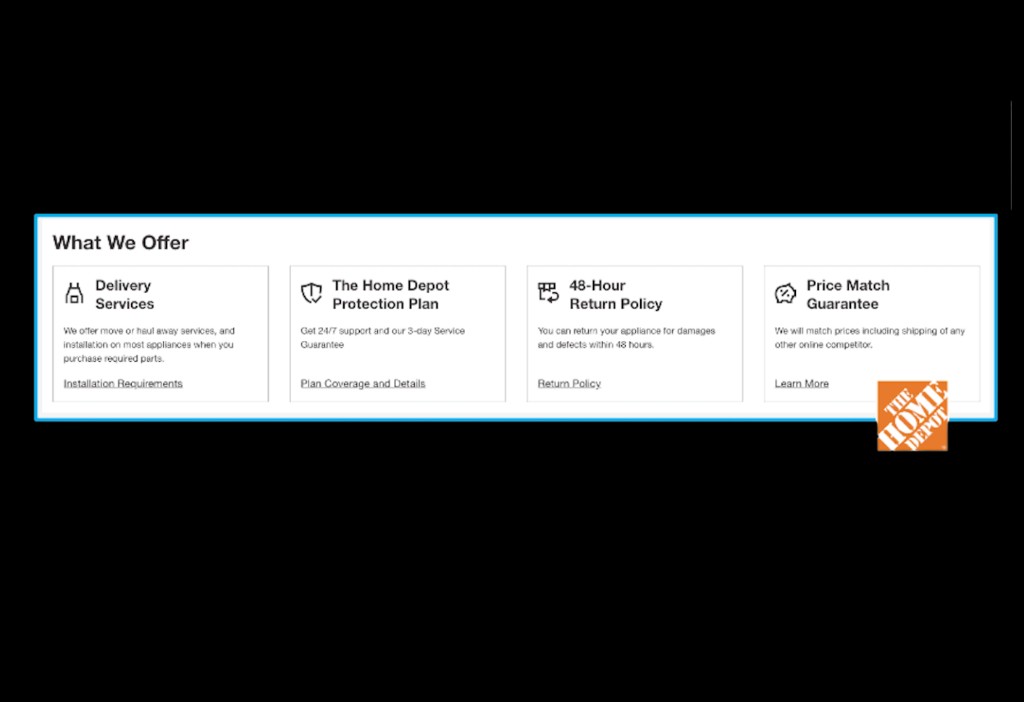
Home Depot ‘What We Offer’ strip with four cards: Delivery Services, The Home Depot Protection Plan, 48-Hour Return Policy, and Price Match Guarantee.
Home Depot A “What We Offer” value-add strip spells out the brand promise in four crisp cards — delivery, protection, returns, price match — right where the buying decision happens.
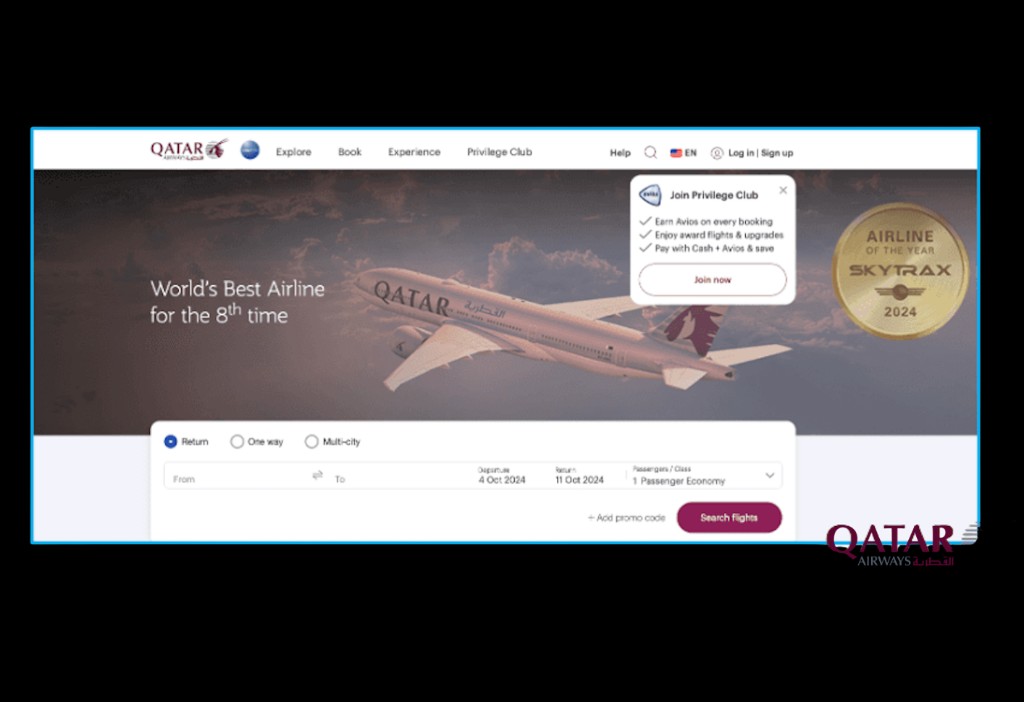
Qatar Airways homepage: hero copy ‘World’s Best Airline for the 8th time’, a Skytrax Airline of the Year 2024 medallion, and a Privilege Club join card with three benefits.
Qatar Airways — loyalty analog An out-of-category cue: pair an earned authority signal (“World’s Best Airline for the 8th time”, Skytrax 2024) with a one-tap join-the-club card. Status + a frictionless front door turns choice into a no-brainer.
Selected slides from the internship deliverable. Internal screenshots and proprietary metrics have been generalized for portfolio use under standard NDA practice.
01
Data-driven
decision making
Adobe Analytics, Fullstory and A/B test results outranked the loudest opinion in the room. Numbers turned debates into decisions.
02
Cross-functional
collaboration
Loyalty, Engineering, and Analytics each held a different piece of the truth. Refining user stories and sharper Jira tickets unlocked velocity.
03
Customer-centric
thinking
Every recommendation had to answer "what does this do for the shopper today?" If it didn't, it didn't make the deck.
04
Loyalty as
strategy
Retention isn't a marketing afterthought; it's a product surface. Tier mechanics, points, and recognition shape long-term value.
05
Adaptability
under pressure
Twelve weeks moves quickly. Staying open to scope changes (and saying no when needed) was as important as the work itself.
Product is a team sport. The best deck is the one engineering can run with on Monday.

The biggest lesson here wasn't analytical; it was relational. Cross-functional teams build the road, not the PM. My job was to translate ambiguous customer signals into a brief that designers, engineers, and loyalty strategists could actually act on.

I left the internship with a much clearer mental model: good PM work is opinionated about the problem and humble about the solution. Anchor the work in metrics, frame it for the team that has to ship it, and trust them to find the better answer along the way.

If extended, the next chapter would be picking one pillar (likely Price Clarity) and running an end-to-end A/B test on the cart savings recap to validate the V-LTR signal in production.

Continue Exploring
All Case Studies →